
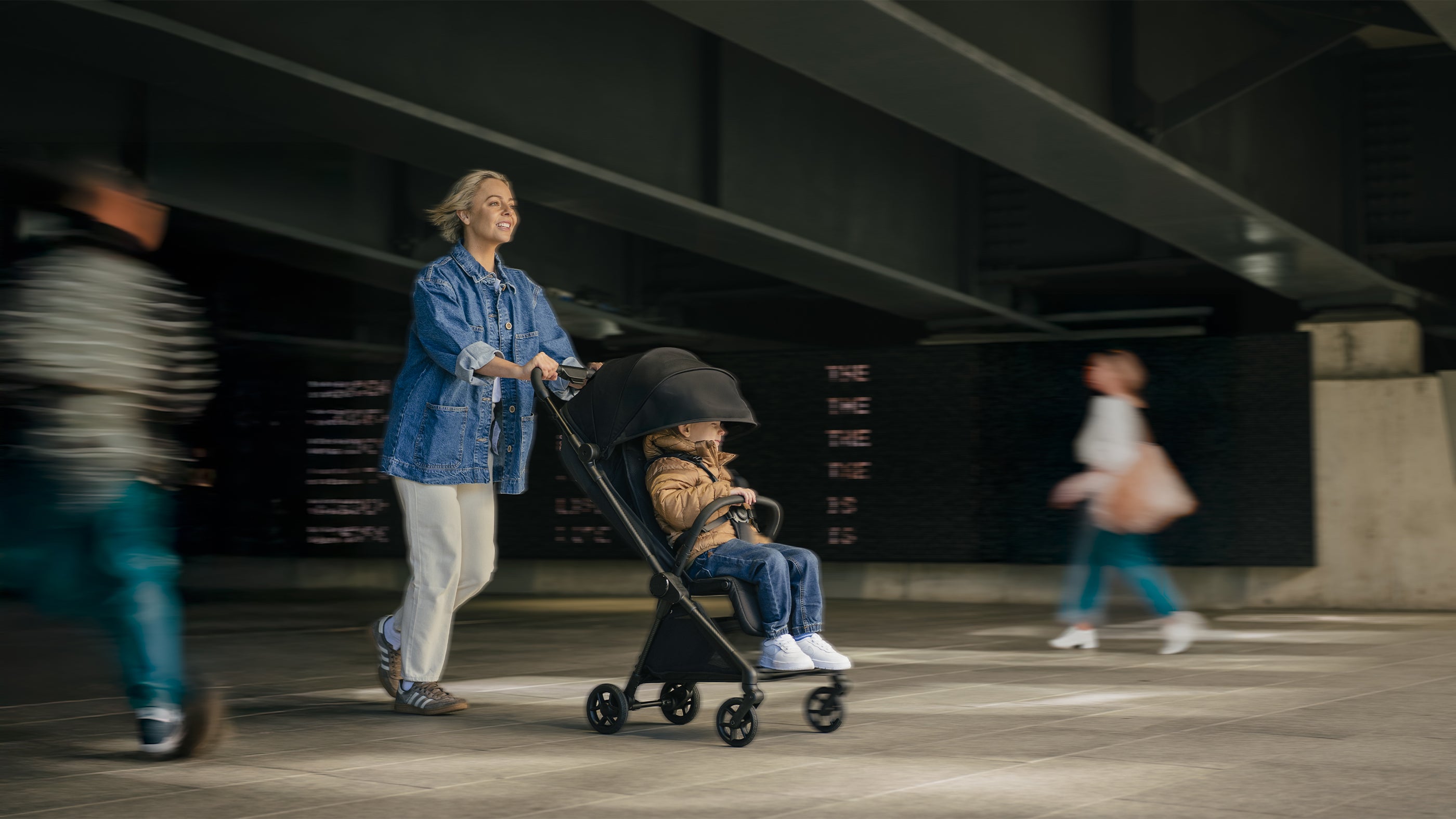
The modern baby stroller is a marvel of engineering—sleek, foldable, and lightweight. But it hasn’t always been this way. To appreciate the effortless glide of a Mompush Ultimate 3, one must look back at the centuries of trial, error, and radical innovation that brought us here. The journey of the "perambulator" (or "pram") is not just a history of wheels and frames; it is a reflection of how society, technology, and our understanding of parenting have evolved.

1. The 1700s: The Royal Beginnings
The story begins in 1733 when the Duke of Devonshire commissioned renowned garden architect William Kent to build a shell-shaped carriage for his children. This wasn't meant for parents to push; it was designed to be pulled by a goat, a pony, or even a dog. These early "strollers" were heavy, ornate, and strictly a status symbol for the aristocracy.
2. The Victorian Era: The Rise of the "Pram"
By the mid-1800s, the design shifted. The pulling mechanism was replaced by handles, allowing parents (or, more commonly, nannies) to push the child. These Victorian prams were high-wheeled, made of wood or wicker, and lacked any suspension. Imagine navigating a cobbled street in London with solid wooden wheels—it was far from the "smooth ride" we expect today from modern baby gear.
In 1889, a pivotal moment occurred: William H. Richardson patented the first reversible stroller. This allowed parents to choose between having the baby face them or face the world—a feature that remains a cornerstone of Mompush design philosophy in 2026.
3. Post-War Innovation: The Foldable Revolution
The 20th century brought the biggest leap forward. As families moved to suburbs and cars became a staple of life, the need for portability grew. In 1965, aeronautical engineer Owen Maclaren used his knowledge of airplane landing gear to create the first aluminum-framed umbrella stroller. For the first time, a stroller could be collapsed and stored in a car trunk.
4. The 2020s: The Era of "Affordable Luxury" and Smart Materials
Fast forward to the present day. In 2026, we have entered a new epoch of stroller design characterized by Smart Materials and Human-Centric Engineering. Modern parents are no longer satisfied with just "foldability"—they demand performance, style, and sustainability.
This is where Mompush has taken the baton from history. By analyzing the pain points of the last 300 years, Mompush has refined the stroller into a tool of absolute freedom.
The Comparison: Then vs. Now

To understand the scale of this evolution, let’s look at the technical leap from traditional designs to 2026 standards.
| Era | Primary Material | Weight (Approx) | Key Limitation | 2026 Equivalent (Mompush) |
| 1733 | Wood / Iron | 60+ lbs | Required an animal to pull | N/A |
| 1900 | Wicker / Heavy Steel | 45 lbs | No suspension; very bulky | Ultimate 3 (High-tech suspension) |
| 1970 | Basic Aluminum | 18 lbs | Flimsy; uncomfortable for baby | Velo (Compact yet padded) |
| 2026 | Carbon Fiber | 11.5 lbs | None | Nexis (Ultra-light & Strong) |
5. The Science of the "Smooth Glide" in 2026
One of the greatest historical complaints was the "vibration" of the stroller. Early models offered zero shock absorption. Today, Mompush utilizes advanced omnidirectional suspension systems.
For example, the Mompush Ultimate 3 incorporates independent wheel suspension that mimics the technology found in high-performance SUVs. This ensures that whether you are on a Victorian-style cobblestone street or a modern park trail, the baby remains undisturbed.
6. Carbon Fiber: The Final Frontier of Weight
History shows a consistent trend: strollers are getting lighter. We moved from wood to steel, then to aluminum. In 2026, the Mompush Nexis has introduced the next logical step: Carbon Fiber.
By borrowing technology from the aerospace and professional cycling industries, the Nexis has solved the century-old trade-off between "sturdiness" and "weight." It is the lightest stroller in history to offer a full range of luxury features, including an auto-fold mechanism that would have seemed like magic to a parent in the 1900s.
7. Sustainability: The Future of the Industry
The history of the stroller is also a history of manufacturing. In 2026, the focus has shifted toward the environmental footprint. Modern parents want gear that lasts. Mompush addresses this by using durable, high-quality materials that prevent the "disposable" culture of cheap strollers. By creating products that grow with the child—from newborn bassinets to toddler seats—Mompush ensures that one purchase serves the family for years, reducing waste.
FAQ: Understanding the Future of Strollers
Q: Why is carbon fiber better than aluminum for a 2026 stroller?
A: While aluminum was the standard for decades, carbon fiber is significantly lighter and offers better "vibration dampening." This means the Mompush Nexis is easier for you to carry and provides a smoother ride for your baby.
Q: Has the safety of strollers improved over history?
A: Immensely. Modern strollers must pass rigorous safety certifications (like ASTM) that didn't exist 50 years ago. Features like the 5-point harness, one-touch braking systems, and anti-tip engineering found on all Mompush models provide peace of mind that early inventors could only dream of.
Q: Will strollers eventually become "smart" or electric?
A: While some tech-heavy models exist, the 2026 trend focuses on "Intelligent Mechanical Design"—strollers like the Mompush Velo that use clever geometry to fold into tiny spaces without needing complex (and heavy) electronics.
Q: How do I choose a stroller that won't become "obsolete"?
A: Look for versatility. A stroller like the Ultimate 3 is "future-proof" because it adapts to your child’s growth phases and is compatible with a wide range of infant car seats, ensuring it remains useful from day one until your child is walking independently.
Conclusion: A Legacy of Motion
From the ornate wood carvings of the 1700s to the sleek, auto-folding carbon fiber frames of today, the baby stroller has come a long way. At Mompush, we are proud to be the current stewards of this history. We don’t just build strollers; we build on three centuries of innovation to ensure that for you and your baby, every journey is a masterpiece of comfort and style.
Ready to experience the pinnacle of stroller evolution? Explore the full 2026 collection at Mompush.com today.
More Than Just a Stroller: The 2026 Guide to Stroller Accessories and Peace-of-Mind Parenting
Don’t Buy a Stroller Until You Read This: A 2026 Survival Guide for New Parents